Wintering an RV in the North Carolina Foothills
The foothills are not Minnesota, but a few freezing nights in a row can still split a fitting.
October 17, 2026 · 4 min read
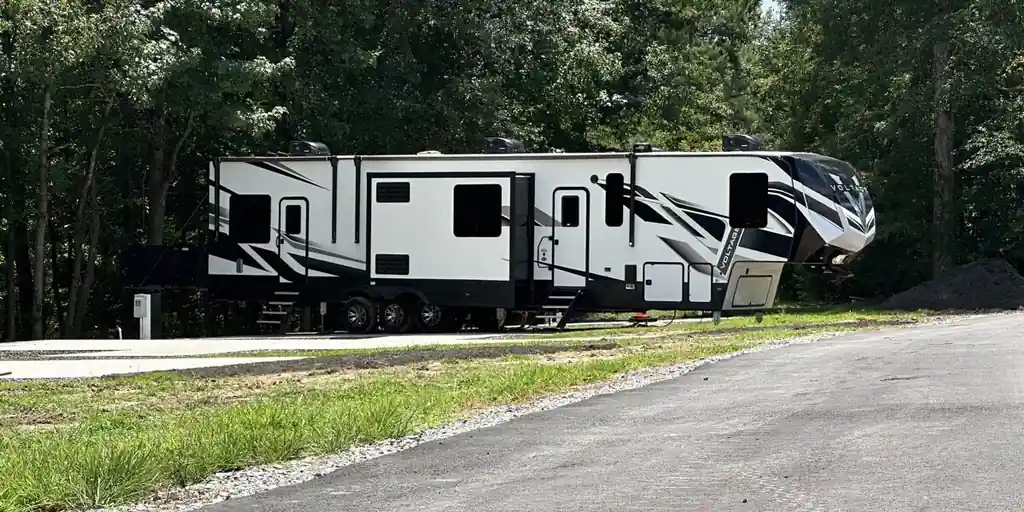
The forecast says 24 degrees on Tuesday night, and your water hose is the white garden-variety kind that came with the rig. By Wednesday morning it is a solid rope of ice, and so, quite possibly, is the fitting behind your hookup. North Carolina's foothills do not get the winters that northern states do, but they do get freezing nights, and RV plumbing does not care how mild the average January is.
Start with the hose rule
Bull Run RV Park has two lines about winter in its rules. Heated water hoses are required in winter, and hoses should be removed when temperatures fall below freezing. Those two sound like they pull in opposite directions, so treat them as a reason to call (704) 685-6437 and ask the office how it wants you to handle a hard-freeze night. The park decides the answer, not a blog post. What a travelling reader can do is arrive prepared for either.
A heated hose is a hose with a heating element and a thermostat built in, plugged into the same pedestal as the rig. Buy one rated for drinking water, check that the thermostat works before the first cold week and not during it, and keep a spare short length of regular hose for the nights when you disconnect and run on the fresh tank instead. Fill the tank before the freeze arrives, not during it.
Skirting and the underbelly
Most of an RV's plumbing lives low, which is exactly where cold air gets in. Skirting closes the gap between the floor and the ground, and it can make a real difference on a windy night. Foam board cut to fit, vinyl skirting panels and insulated wraps all work. The trade-off is that it must be easy to remove, because you will want to check on the tanks and the sewer connection regularly.
Before you install anything, ask the park what is acceptable on a site. Bull Run's rules say no sheds, structures, pet pens or clotheslines, so anything that looks permanent is worth a question first. Fitted skirting is a different thing from a shed, but the office is the one to say so.
Tanks, valves and drains
Freezing is hardest on the parts that hold standing water. A few habits go a long way:
- Keep the black and gray tank valves closed and dump when the tanks are reasonably full, so a plug of liquid does not freeze solid in an empty pipe
- Insulate and support the sewer hose so it drains downhill with no sag where water can pool and freeze
- Use tank heaters, if your rig has them, and test them before the first freeze
- Know where your low-point drains are and how to open them if you will be away
- Wrap exposed outside faucets and the water pressure regulator with foam insulation
Municipal water and sewer connections at your pad, which Bull Run lists among its amenities, make the daily routine easy. The weak point is whatever sits between the connection and your rig, so give that stretch the insulation.
Heat without a generator
Bull Run does not allow generators, so winter warmth comes from shore power, propane or both. Propane furnaces are efficient but use up a bottle faster than you expect when the temperature falls, so check the level at the start of each cold week. Electric space heaters are a common backup, and they pull a lot of power. A 1,500-watt heater alone uses more than a third of a 30 amp service, which is why anyone planning a cold stay on a bigger rig should think about the 50 amp pedestal. Every site at Bull Run has 20, 30 and 50 amp service, so you can match the heater to the plug.
Run your heater on a dedicated circuit when you can, keep the cord short, and use a heater with a tip-over shutoff. Also keep a carbon monoxide alarm that works. Propane combustion inside a closed rig is not a place for guesswork.
Moisture, the quiet winter problem
A sealed RV in cold weather fogs windows and grows mildew in corners. Cooking, showers and breathing all add moisture. Crack a roof vent, run the bathroom fan after showers, and use a small dehumidifier if you can spare the watts. Wipe the window frames in the morning. Condensation is not dramatic, but it quietly damages cabinetry and soft furniture, and winter is when it builds.
A short pre-freeze checklist
- Test the heated hose and plug it in before the temperature drops
- Fill the fresh tank and disconnect the hose on the hardest freeze nights, if the park agrees
- Insulate exposed fittings, the regulator and the sewer hose
- Check the propane level and the carbon monoxide alarm
- Confirm which amp service your heater needs and plug into the right pedestal outlet
- Save the park's number for after-hours trouble, because the park asks guests to call management
None of this is complicated, and all of it is cheaper than a burst fitting. Pull in with your hose tested and your tanks in order, and a freezing week becomes just another cold week on the lot.
Bull Run RV Park, (704) 685-6437
Call (704) 685-6437More articles
Nightly, Weekly or Monthly: Picking Your RV Stay Near Charlotte
A short stay and a long stay ask different things of a park, and the answers are easier to collect before you pull in.
20, 30 or 50 Amp: Matching Your Rig to the Pedestal
Most tripped breakers come from arithmetic nobody did before plugging in, and the arithmetic is short.